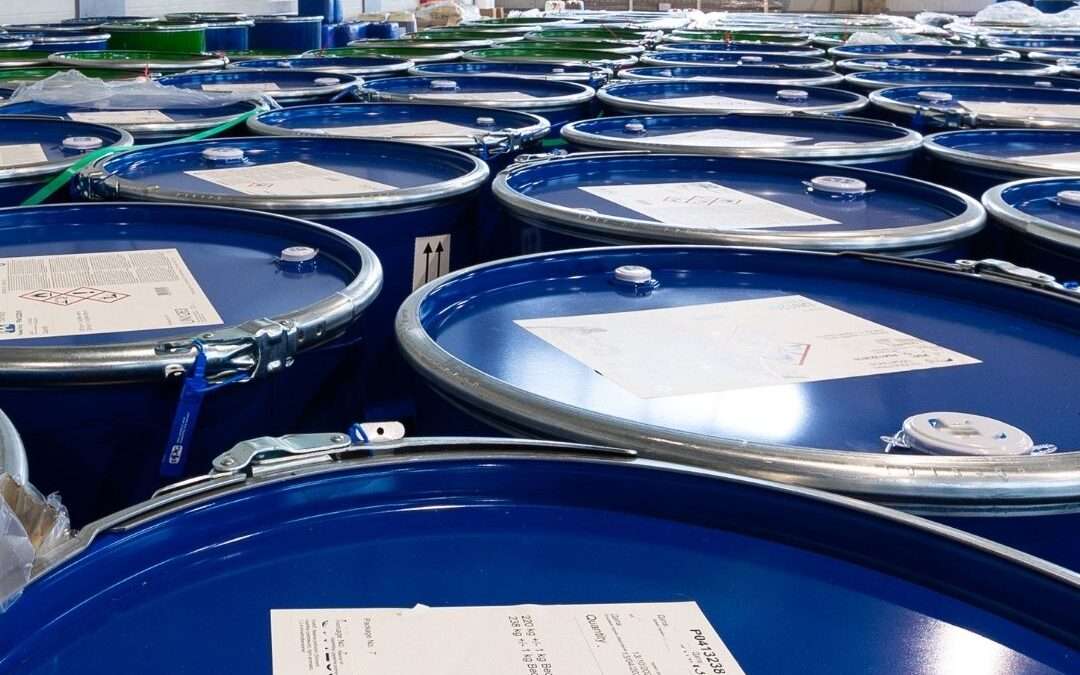
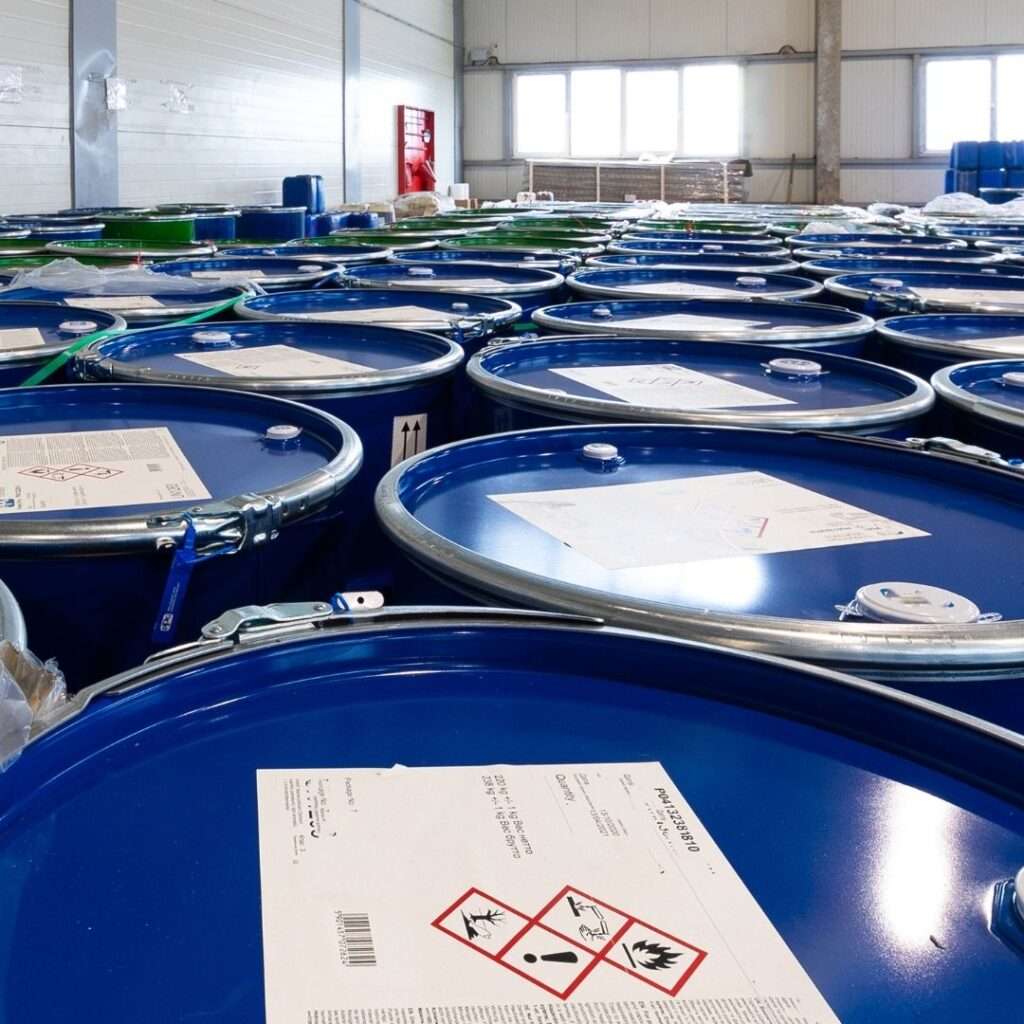
GHS labels provide a standardised approach to chemical labelling that is recognised across borders and industries. By presenting hazard information consistently and clearly, these labels ensure that everyone handling chemicals understands the associated risks and the measures needed to work safely, regardless of location or language.
What is GHS?
GHS is short for the “Globally Harmonized System of Classification and Labelling of Chemicals” and represents an internationally agreed framework developed by the United Nations to ensure that information about chemical hazards remains consistent and understandable worldwide.
The purpose of GHS is to harmonise how chemicals are classified based on their physical, health and environmental hazards, and how those hazards are communicated through labels and safety data sheets (SDS). Previously, different countries used different systems, symbols and terminology, which created confusion and increased the risk of accidents, particularly for companies operating across borders.
Why GHS Labels Are Important
GHS itself is not a law. Instead, it provides a common foundation that countries and regions use to develop their own chemical regulations.
GHS labels provide clearly structured and standardised information about chemical hazards, thereby supporting safe handling, storage and use. For example, in oil and gas operations, where chemicals may be flammable, corrosive, toxic or harmful, incorrect or inconsistent labelling can have serious consequences.
Furthermore, by standardising how hazards are communicated through text and symbols, GHS labels help reduce risk, improve safety awareness, and support regulatory compliance across international operations.
Key Elements of a GHS Label
A GHS label consists of key elements designed to communicate hazard information clearly and effectively:
Product identifier: The chemical name or identifier that matches the substance with its SDS.
Supplier information: Details of the manufacturer, importer or distributor, including contact information.
Signal words: “No signal word”, “Danger” or “Warning”, indicating the relative severity of the hazard.
Hazard statements: Standardised phrases describing the nature and degree of the hazard.
Precautionary statements: Guidance on measures to minimise or prevent adverse effects, including safe handling, storage, disposal and emergency response.
Hazard pictograms: GHS uses a set of standard hazard symbols, also known as pictograms, to visually communicate chemical hazards. These symbols are easy to recognise and quick to understand, even in multilingual workplaces.
Together, these elements ensure that chemical hazards are communicated in a clear, consistent and internationally recognised way.
GHS Implemented Worldwide
GHS is a global system, but countries and regions implement it through national and regional regulations. Although the underlying principles are aligned, specific legal requirements may vary. Therefore, global organisations must carefully manage chemical classifications, hazard statements, and hazard symbols to remain compliant across jurisdictions.
Examples of GHS implementation include:
Europe: GHS is implemented through the Classification, Labelling and Packaging Regulation, commonly referred to as CLP. CLP defines how substances and mixtures must be classified, labelled, and packaged within the European Economic Area. The United Kingdom continues to apply a similar CLP-based framework after Brexit, with some local adaptations.
United States and Canada: In the United States, GHS is incorporated into OSHA’s Hazard Communication Standard. Canada applies GHS through the Workplace Hazardous Materials Information System, known as WHMIS.
Middle East and Asia-Pacific: Many countries in the Middle East and Asia-Pacific, including Saudi Arabia, the United Arab Emirates and India, have adopted or are continuing to develop GHS-based regulations.
GHS labels play a key role in improving chemical safety and supporting regulatory compliance across global operations. By standardising how hazards are classified and communicated, GHS helps organisations reduce risk and improve safety awareness. With varying regional requirements, managing GHS compliance can be complex.
Chemicals play a key role in many products people use every day. However, chemicals can also create risks if they are not managed properly. For this reason, the European Union introduced REACH, one of the most comprehensive chemical regulations in the world. This article therefore explains what REACH is, who must comply with it, and what its main requirements involve.
What is REACH?
REACH is the European Union’s main chemical regulation, and stands for Registration, Evaluation, Authorisation and Restriction of CHemicals.
Its purpose is simple: Make chemical safer.
Before REACH came into force, European chemical regulations differed significantly between countries. As a result, authorities struggled to control risks, share information, and provide equal protection across the region. To address these challenges, REACH brought chemical safety requirements together under a single, unified system. Consequently, companies must now manage chemicals safely and consistently throughout the EU.
The REACH Regulation (EC) No 1907/2006 applies to chemical substances on their own, in mixtures, and in many everyday products (also called article). The European Chemicals Agency (ECHA), together with national authorities in each EU/EEA country, enforces the regulation.
Who Needs to Follow REACH?
REACH applies in all EU member states and EEA countries and includes imported products, not just those made within the area.
REACH responsibilities depend on your role in the supply chain:
Manufacturers: Produce chemicals within the EU/EEA
Importers: Bring chemicals, mixtures, or products into the region
Downstream users: Use chemicals in processes
Distributors: Store or sell chemicals
Companies: Any company that makes, imports, uses, or sells chemicals or chemical-containing products
Workers: Employees handling products containing chemicals must receive safe-use information and training
Hazard data (toxicity, environmental effects, physical hazards)
Safe-use instructions
Exposure scenarios (for larger tonnage bands)
Analytical data to confirm substance identity
Information on uses across the supply chain
The goal is to ensure that companies understand the risks of the chemicals they handle.
Important: REACH follows the principle “one substance, one registration”, meaning companies producing the same substance must share data and submit joint dossiers to avoid unnecessary testing.
Carcinogenic, mutagenic, or toxic to reproduction (CMR)
Persistent, bioaccumulative, and toxic (PBT)
Very persistent and very bioaccumulative (vPvB)
Of equivalent concern
Once authorities identify a substance as an SVHC, they add it to the Candidate List. Consequently, suppliers must meet additional obligations, such as:
Informing ECHA if an article contains the substance above 0.1%
Over time, authorities may move certain SVHCs to Annex XIV (the Authorisation List). At that point, companies may only use the substance if they apply for and receive authorisation. Furthermore, authorisations are time-limited and subject to regular review.
Restrictions address chemicals that pose unacceptable risks to human health or the environment. Depending on the risk, restrictions may:
Ban a substance completely
Limit the quantity used
Restrict certain uses only
Require specific measures, such as labelling or technical controls
Restrictions can apply to substances on their own, in mixtures, or in articles. Notably, they may also apply even when a substance is not registered or is produced in small quantities. However, certain use, such as on-site isolated intermediates or research and development, may qualify for exemptions.
REACH Influence Outside the EU
REACH has become a global reference point for chemical safety. Many countries outside the EU and EEA have created regulations inspired by REACH, with some of them being:
United Kingdom (UK REACH): Adopted after Brexit, largely mirroring EU REACH
Turkey (KKDIK): A REACH-like regulation requiring registration, evaluation, and authorisation
South Korea (K-REACH): Strongly influenced by EU REACH, including registration and risk assessment
India: Developing the Indian Chemicals (Management and Safety) Rules (CMSR), based on REACH-principles
REACH sets one of the highest standards for chemical safety in Europe, and its influence now extends worldwide. By understanding your responsibilities, you not only protect people and the environment but also strengthen your business. As more countries adopt REACH-inspired regulations, meeting these requirements is becoming a global expectation.
Hazard Communication: What is the HazCom Standard?
The Hazard Communication (HazCom) Standard explains how organisations must identify and communicate chemical hazards to protect workers. Although the regulation originates in the United States, it aligns closely with global standards. As a result, it remains highly relevant for companies operating internationally.
HazCom Explained
HazCom is short for the Hazard Communication Standard. It provides a regulatory framework that requires employers to communicate chemical hazard information clearly and consistently to workers and others who may encounter hazardous substances in the workplace.
More specifically, HazCom ensures that organisations identify, classify, and communicate chemical risks in a way workers can easily understand and act upon. Therefore, the standard covers information on potential health effects, physical hazards, and safe handling practices.
Who does HazCom apply to? HazCom applies to companies that manufacture, import, distribute or use hazardous chemicals. This includes employers across industries such as oil and gas, energy, manufacturing and logistics, as well as contractors and suppliers involved in chemical handling.
Core Elements of HazCom
The HazCom Standard relies on several core elements. Together, these elements ensure that chemical hazards are communicated effectively throughout the workplace.
Hazard classification: Organisations must assess and classify chemicals based on their physical, health, and environmental hazards. This classification establishes the foundation for all subsequent hazard communication. As a result, employers can identify and communicate hazards consistently across products and locations.
Labelling requirements: Employers must clearly label containers that hold hazardous chemicals. These labels include product identifiers, hazard pictograms, signal words, hazard statements, and precautionary statements. Consequently, workers can quickly recognise risks and take appropriate protective measures. Together, these elements help workers quickly recognise risks and take appropriate precautions.
Safety data sheets (SDS): SDS provide detailed information about a chemical’s properties, hazards, safe handling, storage, emergency measures and disposal. HazCom follows the internationally recognised 16-section SDS format.
Employee training: Employers must train workers to understand chemical hazards, labels, and SDS. As a result, hazard information is not only available but also effectively applied in day-to-day operations.
HazCom in the United States
In the United States, the Occupational Safety and Health Administration (OSHA) enforces the HazCom Standard. Employers must comply with HazCom requirements wherever hazardous chemicals are present in the workplace.
Compliance requires employers to classify chemicals accurately, label containers correctly, maintain up-to-date SDS, and provide appropriate employee training. Furthermore, employers must develop and maintain a written hazard communication programme that explains how they meet these requirements.
However, HazCom and GHS are not identical. GHS is an international system that the United Nations developed to standardise chemical classification and labelling worldwide. In contrast, HazCom functions as a national regulatory standard.
HazCom represents the United States’ implementation of GHS. It adopts GHS principles, such as hazard classes, pictograms, and the 16-section SDS format, while remaining a national regulatory standard.
HazCom in a Global Context
Although HazCom is a US regulation, its alignment with GHS makes it highly relevant globally. Many countries across Europe, the Middle East, the Americas and Asia-Pacific have implemented GHS-based chemical safety regulations.
For multinational companies, understanding HazCom supports consistent hazard communication across regions, simplifies compliance efforts and contributes to safer operations.
Overall, the HazCom Standard plays a critical role in ensuring that organisations clearly identify and communicate chemical hazards in the workplace. By understanding HazCom and its alignment with the Globally Harmonised System, companies can strengthen compliance, improve workplace safety, and maintain consistent hazard communication across regions.
What AI Means for Chemical Substitution Management
Chemical substitution is becoming a central priority for companies that handle hazardous substances. Traditionally, finding safer alternatives has required significant manual effort. AI is changing this entirely. In this article, we explain in what way.
Challenges in Traditional Chemical Substitution
Finding safer alternatives (substitution) is essential for reducing health risks, improving environmental performance and meeting global regulatory expectations. Substitution is increasingly expected by regulators, customers and investors across Europe, the Middle East, North America and Asia-Pacific.
Despite its importance, substitution is traditionally difficult.
Many organisations must manually compare hazard classifications, performance characteristics, regulatory requirements and supply chain constraints. As a result, substitution processes are often slow, fragmented and prone to human error. This can delay safer chemical adoption and make it harder for companies to meet growing ESG expectations.
How AI Can Affect Chemical Substitution
AI introduces a more intelligent, data-driven approach to chemical substitution. Instead of relying on manual comparisons, scattered data and expert judgement alone, AI can analyse large volumes of chemical information in seconds and highlight safer, compliant and operationally suitable alternatives. It brings structure, consistency and predictive capability to a process that has traditionally been slow and uncertain.
Faster Identification of Safer Alternatives
Instead of searching manually, AI can instantly analyse extensive chemical datasets and SDS records and suggest alternatives that offer reduced hazards, similar performance and better regulatory outcomes. This speeds up decision-making by helping organisations respond quickly to regulatory changes.
Automated Hazard and Risk Assessment
AI can help interpret complex data, classify hazards and estimate risk scores automatically. This removes inconsistency caused by manual interpretation and ensures every substance is evaluated within a standard, reliable framework. AI can also help flag chemicals with missing or outdated data, ensuring assessments remain accurate.
Compliance Assurance Across Global Regulations
With operations often spanning multiple countries, compliance demands may vary. AI continuously tracks regulatory updates across regions and automatically checks whether a substance or its alternative is compliant. This protects organisations from unintentional non-compliance and helps maintain a proactive approach to international chemical safety expectations.
Enhanced Sustainability and ESG Performance
AI can help organisations assess environmental impacts by comparing biodegradability, ecotoxicity, emissions and lifecycle considerations. As a result, it can help with ESG reporting and strengthen the organisation’s environmental profile across global markets.
Important: Although AI provides valuable insights, it is not fully reliable on its own. All AI-generated recommendations should be reviewed and validated by qualified experts to ensure accuracy, safety and regulatory compliance.
AI is transforming chemical substitution by simplifying complex processes, speeding up evaluations and enabling safer, more sustainable decisions. For organisations looking to reduce risk and meet global regulatory and ESG expectations, AI-powered chemical systems may be the way to go forward. By integrating AI into their systems, companies can modernise operations, improve safety and be prepared for future regulatory requirements.
Chemicals play a vital role in the oil and gas sector, but behind everyday use lie significant risks. When chemicals are poorly managed, they can threaten health, damage equipment, and harm the environment.
Chemicals in Offshore and Land-Based Operations
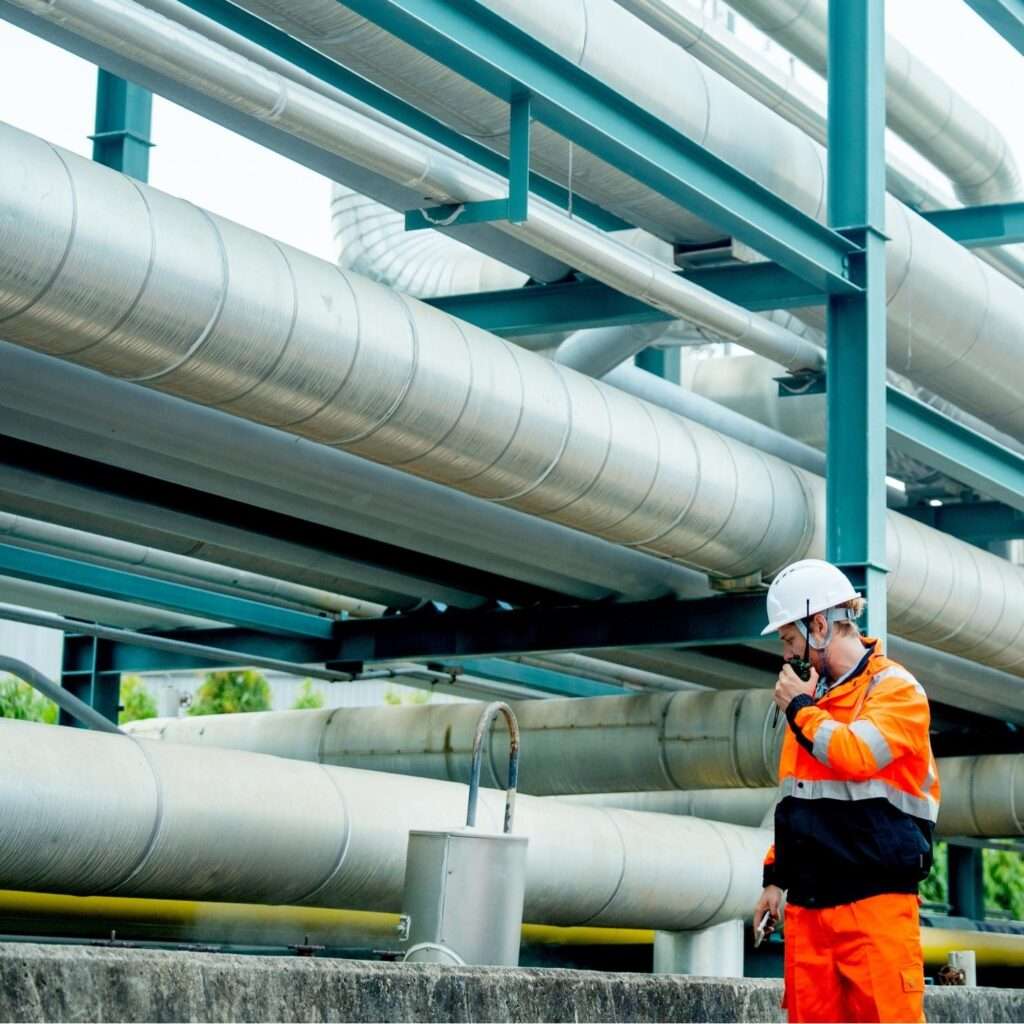
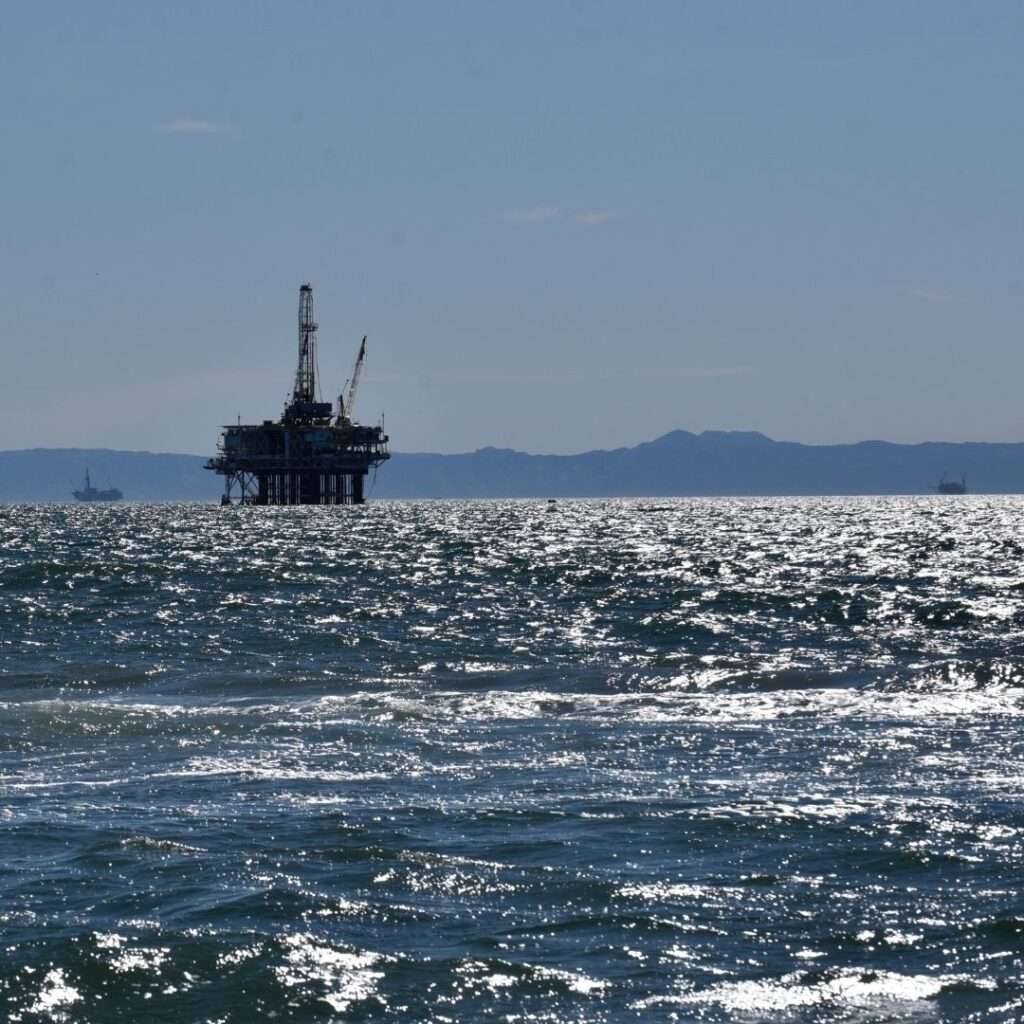
Chemicals are used daily across offshore installations and land-based facilities. They are essential for drilling, production, maintenance, and cleaning activities, supporting everything from corrosion protection and scale prevention to water treatment and lubrication.
Used correctly, these substances enable reliable and efficient operations for both operators and drilling contractors. However, their widespread use also means that even minor lapses in handling, labelling, or documentation can create significant safety and environmental consequences.
Common Chemicals and Their Use:
Acids: Used for cleaning and well stimulation.
Biocides: Prevent bacterial growth in water systems.
Corrosion inhibitors: Protect pipelines and equipment from rust.
Degreasers: Clean machinery and remove oil residues.
Demulsifiers: Separate oil, water, and solids in production.
Drilling additives: Control pressure and lubricate during drilling.
Glycols: Prevent freezing and hydrate formation.
Hydraulic fluids: Power valves, pumps, and tools.
Scale inhibitors: Prevent mineral build-up in wells and pipelines.
Typical Chemical Hazards and Risks
Chemical hazards affect people, the environment, and operational performance across the oil and gas sector.
Health Hazards
Toxic exposure: Inhalation of vapours, mists, or dusts may cause respiratory irritation, dizziness, or long-term health effects.
Skin and eye contact: Many chemicals are corrosive or irritating, posing risks of burns, dermatitis, or eye injury.
Flammability and explosion risk: Solvents, fuels, and gases can ignite under specific conditions, especially in enclosed or poorly ventilated areas.
Reactivity: Incompatible chemicals may react violently, generate heat, or release toxic gases.
Chronic health effects: Long-term exposure can contribute to neurological, reproductive, or carcinogenic outcomes.
Sensitising risk: Certain substances, including diisocyanates, are strong respiratory and skin sensitisers. Repeated or prolonged exposure may cause allergic skin reactions, occupational asthma, or long-term breathing difficulties, with symptoms potentially occurring even at very low exposure levels once sensitisation has developed.
Environmental Hazards
Marine pollution: Offshore spills can spread rapidly, affecting marine life and coastal ecosystems.
Soil and groundwater contamination: Land-based spills or improper disposal can cause long-term environmental impact.
Air emissions: VOCs and other fumes released during handling or disposal contribute to air pollution and create hazardous vapours.
Operational Hazards
Corrosion and material degradation: Poor control of corrosive substances can weaken pipelines, tanks, and valves.
Equipment malfunction: Contamination or incompatible products may damage pumps, sensors, or control systems.
Storage and containment failures: Poor segregation, temperature control, or maintenance increases the risk of instability or leaks.
Process disruption: Mismanaged inventories can cause delays, shutdowns, or reduced efficiency.
Emergency response limitations: Incorrectly labelled or untraceable chemicals complicate firefighting and incident response.
Staying Clear of Chemical Hazards and Risks
Managing chemical risks is all about preventing incidents before they occur.
Stay Compliant
In the oil and gas sector, chemical management must meet strict industry-specific regulations alongside general health and safety requirements. Clear documentation, robust controls, and regular audits help ensure safe operations and ongoing compliance.
Clear Procedures and Training
Conduct regular risk assessments and ensure clear handling and storage guidelines are in place. Continuous training and a strong safety culture help staff recognise hazards early and respond effectively.
Accurate Labelling and Documentation
Keep safety data sheet (SDS) and risk report updated and accessible, and use standardised, multilingual labelling across all sites. Full traceability, from delivery to disposal, reduces the risk of errors and non-compliance.
Adequate Personal Protective Equipment (PPE)
Select and use PPE suited to each chemical and task. Proper gloves, eye protection, and respiratory equipment reduce exposure risks and support safe handling.
Safe Storage and Maintenance
Separate incompatible chemicals, maintain containment systems, and carry out regular inspections to detect leaks or corrosion before they escalate.
Digital Oversight
Digital tools make it easier to track inventories, check compatibility, and share data between locations. Real-time visibility helps prevent incidents and simplifies reporting. Real-time visibility helps prevent incidents and simplifies reporting, particularly in complex, multi-site oil and gas operations. Where connectivity is limited, offline functionality ensures critical chemical data remains available, with updates synchronised automatically once a connection is restored.
Chemicals will always be a vital part of the oil and gas industry, supporting everything from drilling and production to maintenance and safety. But with their benefits come undeniable risks. In such complex and high-pressure environments, effective chemical management is not optional – it is essential. By combining clear procedures, continuous training, and digital tools, companies can turn chemical safety from a compliance task into a core part of the operation.