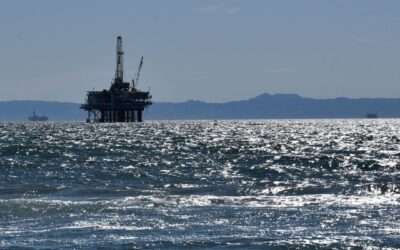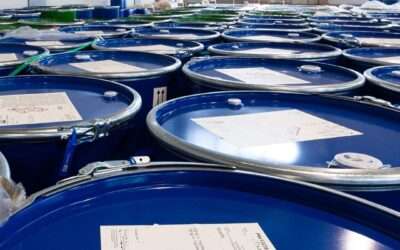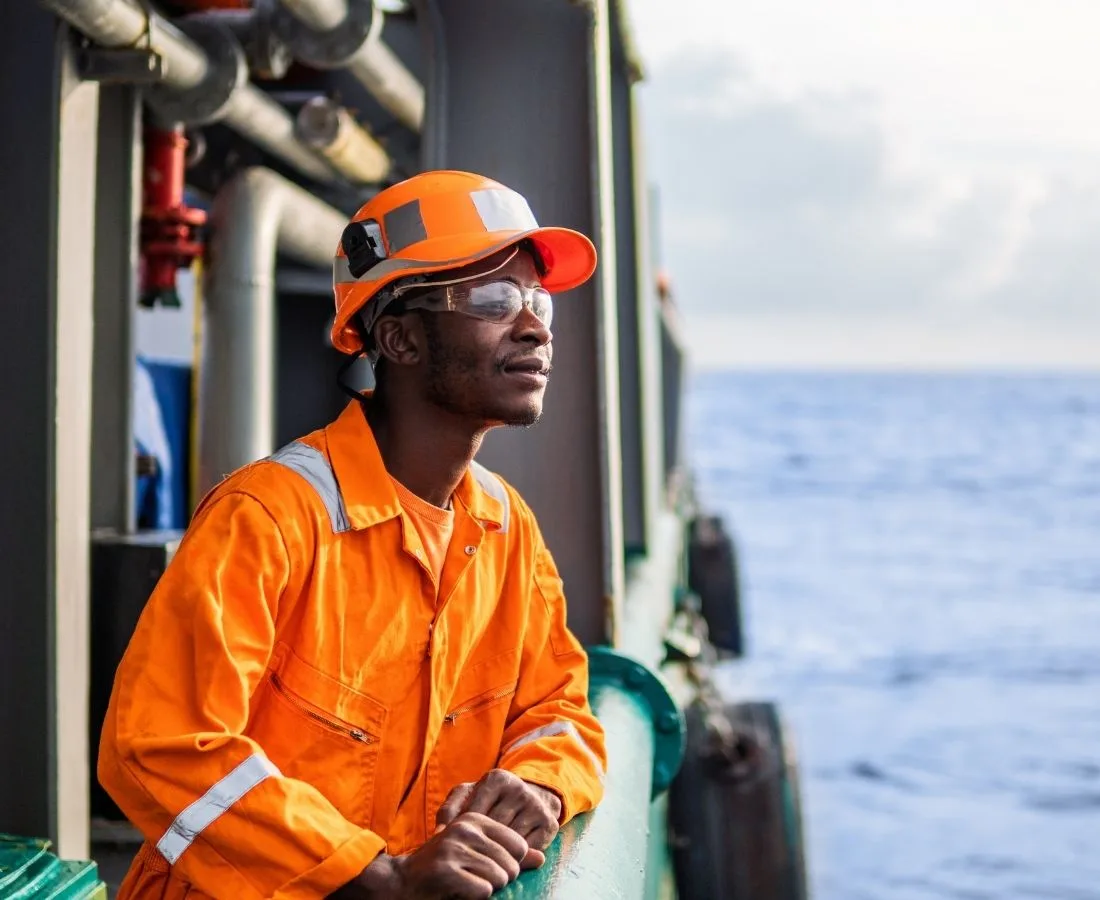
Floating Liquefied Natural Gas (FLNG) facilities use chemicals throughout gas processing, LNG production, utilities, maintenance and marine operations. Managing these chemicals requires accurate information about what is onboard, where chemicals are used, their hazards and the controls required to protect personnel and the environment.
What chemicals are used on FLNG facilities?
The chemicals used on an FLNG facility depend on the composition of the natural gas, process technology, operating conditions and facility design.
Common examples include methanol and monoethylene glycol (MEG) for hydrate control, amine solutions for acid gas removal, glycols for gas dehydration, corrosion inhibitors, antifoaming agents, biocides and water treatment chemicals.
These chemicals support different stages of gas production and processing before and during LNG production.
Gas treatment and dehydration
Natural gas must meet specific requirements before it can be liquefied. Depending on the process, amine-based solutions can be used to remove acid gases such as carbon dioxide (CO₂) and hydrogen sulphide (H₂S).
Water also needs to be controlled. Glycols are commonly associated with gas dehydration, while methanol and MEG can be used for hydrate prevention and control in gas production systems.
Other chemicals may be required for corrosion control, water treatment, cleaning and supporting utility systems.
FLNG chemicals extend beyond LNG processing
Not every chemical onboard an FLNG facility is a process chemical.
Maintenance and asset integrity activities can involve paints, coatings, lubricants, solvents, degreasers, adhesives and cleaning products. Laboratories may use chemicals for sampling and analysis, while utility systems can require products for water treatment and equipment operation.
As an FLNG installation is also a floating marine facility, additional chemicals may be associated with vessel maintenance and marine operations.
How are chemicals managed on an FLNG facility?
Chemical management on an FLNG facility involves controlling chemical information throughout the lifecycle of a product, from approval and introduction to use, storage and eventual removal.
This can include:
- Chemical approval before a new product is introduced
- Maintaining an accurate chemical inventory
- Keeping safety data sheets (SDS) up to date
- Assessing chemical and exposure risks
- Documenting appropriate controls and protective measures
- Evaluating hazardous chemicals for substitution
- Managing environmental and regulatory information
Chemical information also needs to reflect operational changes. A product may be replaced, an SDS may be updated or a chemical may begin to be used in a different location or process.
Why is chemical management important for FLNG operations?
FLNG facilities bring several complex operations together on one floating asset. Chemicals can be stored and used across gas processing, liquefaction, utilities, maintenance and marine areas.
For HSE managers, this creates a need for visibility across departments and locations. Production personnel may focus on chemicals required for reliable processing, while maintenance and marine teams manage different products and associated risks.
A central chemical management system can help provide one source for chemical inventories, SDS, approvals, risk assessments and other chemical information.